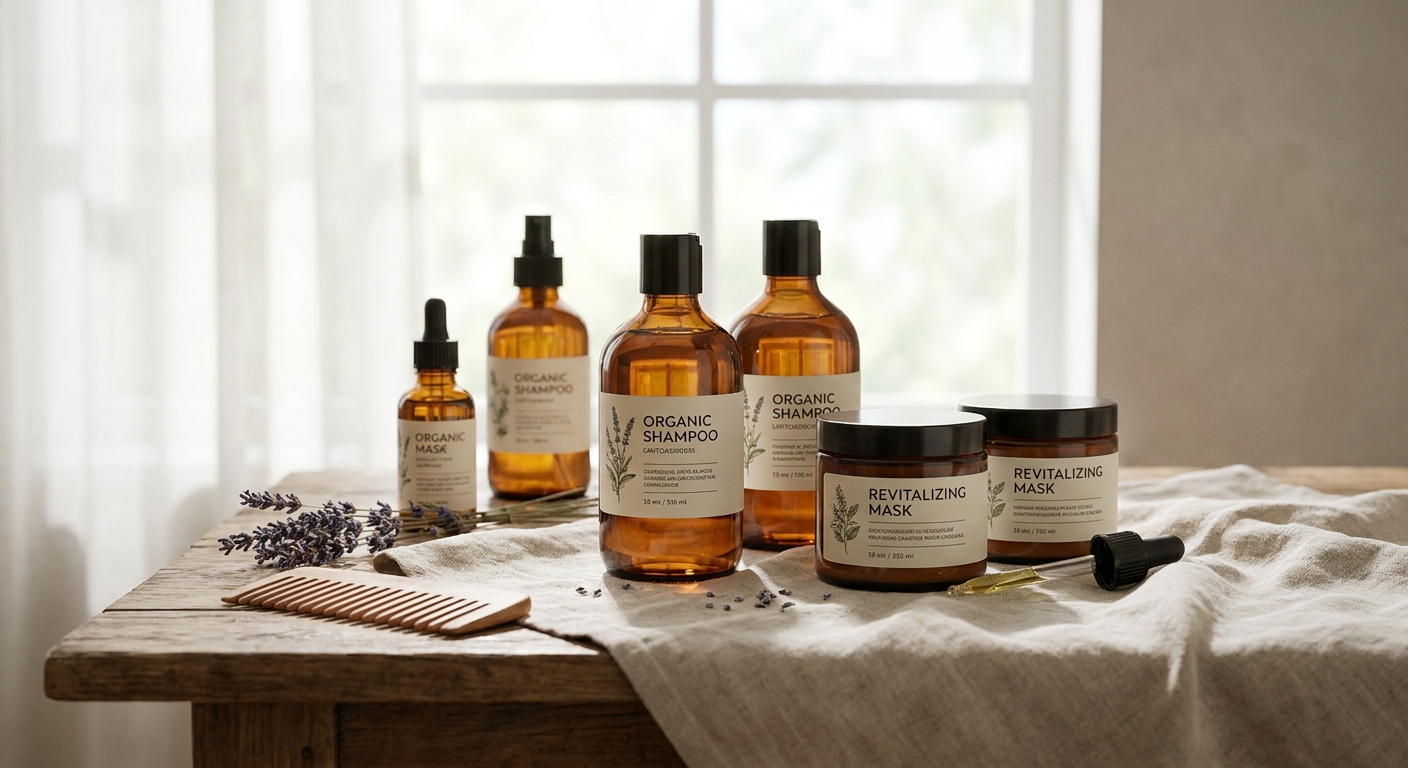
Haircare brands live and die on texture: shine, slip, foam, pour, gloss. Product photography for haircare brands has to capture all of that on a bottle that looks identical to twenty competitors on the same shelf, which is why generic product photographers miss the mark more often than they get it right.
- Product photography for haircare brands needs macro texture shots, not just clean bottle-on-white sets.
- Courtney Dailey Photography treats formula viscosity and shine the same way it treats skincare texture, as the hero detail.
- A full SKU set typically runs 8-12 images per product for 2026 e-commerce and campaign use.
- Skip photographers who can't show pour, foam, or gloss consistency across an entire line.
- Book the texture-macro shoot first, then layer in lifestyle and bundle sets.
Why this matters
A haircare bottle photographed like a skincare jar undersells the product. Shoppers scroll past shine serums and clarifying shampoos expecting to see slip, gloss, and foam texture in the thumbnail, not just a sharp label. Miss that, and the product page converts like every other bottle on the shelf.
In 2026, most DTC haircare brands run the same photo set across Amazon, Shopify, and paid social. One shoot has to work three different placements, which means lighting and color accuracy can't drift between the e-commerce hero shot and the campaign lifestyle frame.
Who this is for
This guide is for marketing leads and founders at haircare brands, shampoo, conditioner, styling, scalp care, who are choosing a photographer for a launch, a line refresh, or a full catalog reshoot. It's also for agencies sourcing photography talent on behalf of haircare clients who need a Los Angeles-based team that understands formula and packaging, not just studio lighting.
Courtney Dailey Photography works from Los Angeles on beauty campaign and cosmetic product photography, and the same criteria that apply to a luxury skincare product photography shoot apply directly here: texture, formula accuracy, and packaging consistency carry across categories.
What to look for in product photography for haircare brands
Texture and viscosity control
A thick clarifying mask and a lightweight leave-in spray behave completely differently under studio light: one pools, one drips, one holds a peak. A photographer who can only shoot a static bottle on white will flatten that difference, and the product page loses the one visual cue that tells a shopper what the formula actually feels like.
Macro capability for shine and foam
Haircare marketing sells on shine, gloss, and lather. That requires true macro lens work, think 60mm-100mm range, not a cropped-in standard shot. Without it, texture claims on the packaging (glass-like shine, rich lather) have nothing backing them visually.
Color accuracy across packaging and formula
Haircare lines often ship five to eight SKUs in near-identical bottles distinguished only by cap color or label accent. Color drift between shots makes a line look inconsistent on a shelf page or category grid, and it's one of the fastest ways to make a catalog look unprofessional.
Lighting consistency across an entire SKU line
If a brand reshoots one new SKU six months after the original set, the lighting setup has to match or the new bottle will look like it belongs to a different brand. A photographer who documents lighting ratios and reference shots protects that consistency for future shoots.
E-commerce and campaign versatility
Most haircare brands need the same shoot to output a white-background e-commerce set, a lifestyle image for paid social, and a hero image for the homepage. Photographers who only shoot one format force the brand into a second, separate booking.
Turnaround and usage rights
Haircare launches run on tight retail and Amazon deadlines. A clear scope on turnaround time and usage rights (paid social, print, retail one-sheets) upfront avoids a rushed renegotiation two weeks before launch.
Top picks: which shoot format to book
The hero shot pick — e-commerce base set
Every SKU needs a clean, color-accurate base image for Shopify and Amazon listings. Expect 3-5 angles per bottle at minimum, shot at a resolution that holds up at 300 dpi for print reuse. Verdict: Buy — this is the non-negotiable starting point for any catalog.
The texture pick — macro pour and foam
This is the shot that actually differentiates haircare from every other beauty category: pour, drip, foam peak, or gloss reflection captured at true macro detail. One well-lit macro frame does more conversion work than five generic bottle shots. Verdict: Buy — skip this and the product photography for haircare brands set looks incomplete.
The campaign pick — lifestyle and editorial
A styled, editorial-lit image built for a homepage hero or a paid social campaign, usually shot with a model or hands-on application. This is where a photographer's beauty campaign experience, not just product-table skill, shows up. Verdict: Consider — worth the added cost for launch SKUs, skippable for line extensions.
The bundle pick — multi-SKU set shots
Routine sets or gift bundles need a group composition that keeps every bottle color-accurate and evenly lit, which is harder than it looks with five bottles of different heights and finishes. Verdict: Consider — necessary if the brand sells routines, otherwise low priority.
The motion-adjacent pick — cinemagraph-style stills
A still that implies motion, a suspended pour or a foam mid-drop, gives social teams a frame that reads like video without a video budget. Verdict: Consider — useful for brands running heavy Reels or TikTok content, low priority for pure e-commerce plays.
Book haircare product photography
Los Angeles-based shoots for shampoo, conditioner, and styling lines.
What to avoid
- Skincare-only photographers with no texture range. A photographer who only shoots serum droppers and jar creams may not have the lighting rig or lens setup for foam and pour work.
- Flat-rate package deals limited to white background only. These leave out the lifestyle and macro shots a 2026 product page actually needs to convert.
- No documented lighting reference between shoots. Without it, a line refresh six months later won't match the original catalog, and the whole shelf page looks inconsistent.
Verdict comparison
| Shoot format | Best for | Key spec | Verdict |
|---|---|---|---|
| Hero e-commerce set | Amazon/Shopify listings | 3-5 angles, 300 dpi | Buy |
| Texture macro | Shine/foam/pour claims | 60-100mm macro lens | Buy |
| Campaign lifestyle | Launch SKUs, homepage | Styled/editorial lighting | Consider |
| Bundle set | Routine/gift sets | Multi-bottle color match | Consider |
| Motion-adjacent still | Reels/TikTok content | Suspended-motion capture | Consider |
FAQ
What is product photography for haircare brands?
It's photography built to show formula texture, shine, foam, and pour alongside standard packaging shots. Haircare shoots need macro lens work that skincare-only photographers often skip.
How many images does a haircare product shoot need per SKU?
Most brands need 8-12 images per SKU in 2026, covering e-commerce angles, one macro texture shot, and at least one lifestyle or campaign frame. Bundle and routine sets need additional group compositions.
Is lifestyle photography necessary for haircare product listings?
Lifestyle shots help launch SKUs and homepage placements but aren't required for every line extension. A clean e-commerce base set and one texture macro shot cover the essentials.
What lens is best for shine and foam texture shots?
A macro lens in the 60mm-100mm range captures shine, foam peaks, and pour detail without distortion. Standard product lenses crop in but lose the fine texture that sells haircare formulas.
Does a skincare photographer work for haircare brands too?
A photographer with skincare and cosmetic experience often transfers well to haircare, since both categories depend on formula texture and color-accurate packaging shots. Ask to see foam, pour, or gloss examples specifically before booking.
How long does a haircare product photography shoot take?
A single-SKU shoot with a full 8-12 image set typically takes one shoot day, while a multi-SKU catalog with lifestyle and bundle shots can run two to three days. Turnaround for edited files usually follows within one to two weeks.
What's the difference between e-commerce and campaign photography for haircare?
E-commerce photography is clean, white-background, and built for listings, while campaign photography is styled, lit for mood, and built for homepage or paid social use. Most haircare launches need both from the same shoot.
One last thing
The shot brands skip most often, the macro pour or foam frame, is usually the one that carries the product photography for haircare brands set. A clean bottle shot proves the SKU exists; a macro texture shot proves the formula works, and that's the frame shoppers actually zoom into before they add to cart.
Courtney Dailey Photography builds haircare and skincare campaigns around that same principle: the Courtney Dailey Photography approach treats texture as the lead image, not an afterthought, whether the SKU is a shine serum or a clarifying shampoo.