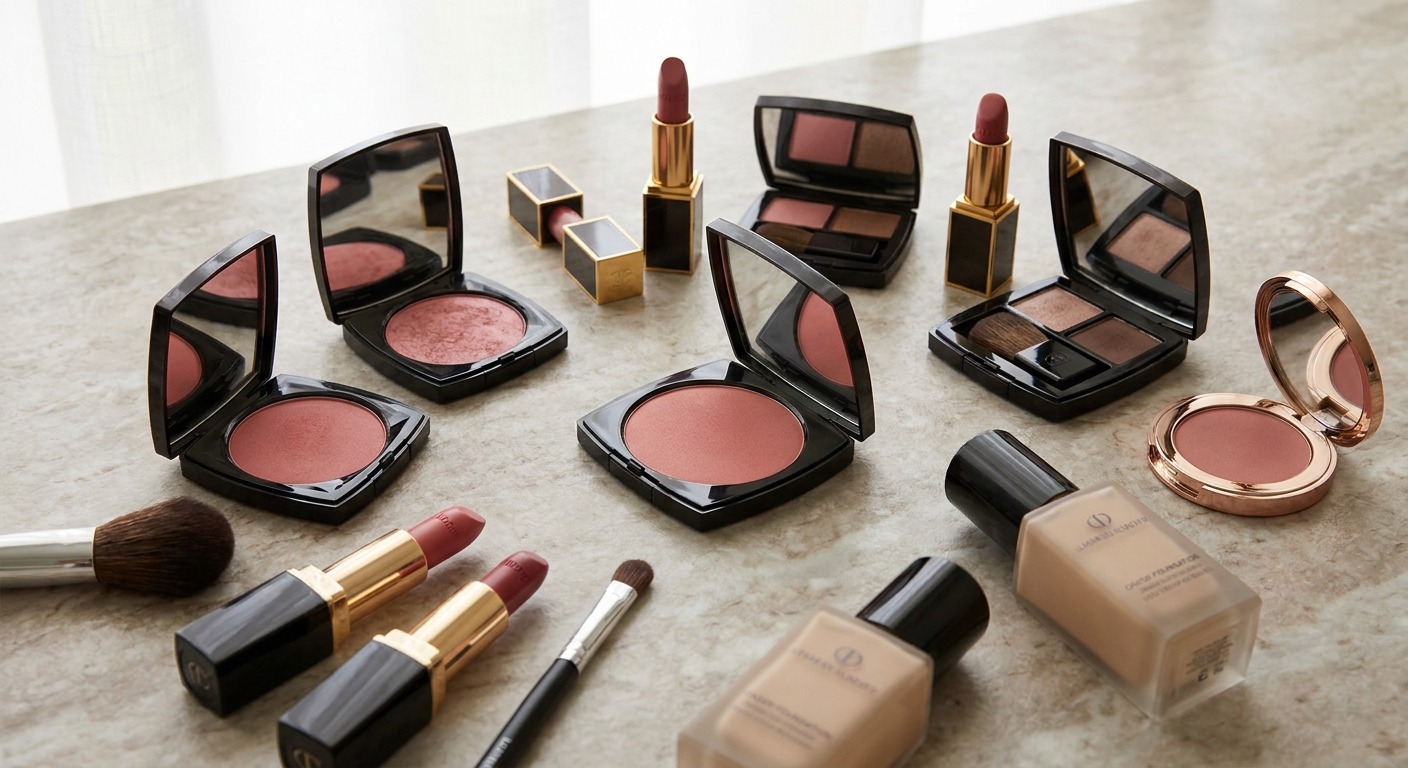
Makeup brands live or die on how the product looks in a three-second scroll, and that means product photography for makeup brands has to do more work than a plain white-background shot ever could.
- Product photography for makeup brands must nail color accuracy first — pigment shift kills conversion.
- Courtney Dailey Photography shoots luxury makeup and skincare campaigns from Los Angeles in 2026.
- Skip single-format shoots; buy coverage that spans hero, swatch macro, and social crop in one session.
- Generic stock-style lighting is a Skip for makeup brands with more than 6 shades in a line.
Why this matters
A foundation bottle photographed under the wrong white balance looks like a different shade online than it does on the shelf. That single mismatch drives returns and one-star reviews about "color not matching photos." In 2026, most makeup buying decisions happen on a phone screen before a customer ever touches the product, so the photo is the product experience for the first 30 seconds.
Brands that treat product photography as a line item to minimize end up reshooting six months later once returns data shows the pattern. Brands that treat it as a campaign asset — usable across ecommerce, paid social, and retail decks — spend once and reuse for a year.
Who this is for
This guide is for marketing leads and founders at indie and mid-size makeup brands, plus agencies managing beauty clients who need photography that holds up across a product detail page, an Instagram feed, and a Sephora or Ulta wholesale deck. If you're launching a shade range, a limited palette, or a full relaunch in 2026, the criteria below decide whether your shoot photography converts or gets quietly swapped out three months later. Courtney Dailey Photography works this exact brief for luxury skincare, makeup, and fragrance campaigns out of Los Angeles.
What to look for in product photography for makeup brands
Color accuracy across every shade
A 12-shade foundation line needs every bottle to read true to its actual pigment, not just the hero shade under studio lighting. Color-managed workflows and calibrated monitors catch shifts before they reach your product page — a shade that photographs warmer than it wears is a guaranteed return driver.
Texture and finish detail
Matte, dewy, satin, and metallic finishes read completely differently under the same light. A photographer who lights a pressed powder the same way as a liquid highlighter is going to flatten the exact texture difference your customer is paying for.
Swatch and macro capability
Customers scroll past bottle shots looking for the swatch. Macro-level texture and pigment close-ups do more to move a beauty buyer toward add-to-cart than a clean product-only image ever will on its own.
Campaign versatility, not just ecommerce cleanup
A shoot that only produces white-background cutouts leaves you scrambling for paid social and launch-day content. Photography built for both a product detail page and a campaign carousel saves a second shoot day and a second invoice.
Consistency across a SKU line
A 6-to-20-SKU shade range needs one lighting setup, one color profile, and one retouching standard applied across every unit. Inconsistent shoots — where SKU 3 looks warmer than SKU 14 — undercut the shelf-cohesion a shade wall depends on.
Usage rights for paid media
Campaign imagery destined for paid social or retail media networks needs licensing that covers that use explicitly. A photographer quoting ecommerce-only usage on a campaign brief is going to cost you a second negotiation later.
Plan your 2026 campaign shoot
Discuss shade range coverage, usage rights, and timeline before you book.
Top picks: shoot formats that actually cover a makeup launch
The hero shot — the safe pick
A clean, color-accurate product-only image against a controlled background is the baseline every makeup brand needs, and it's the one format buyers expect on the product detail page. One spec that matters: color fidelity within a tight tolerance of the physical packaging under D65-equivalent lighting. Skip anything softer than that on a 2026 launch. Verdict: Buy.
The swatch and texture macro — the converter
This is the close-up that shows pigment payoff, shimmer particle size, or cream texture at a scale a bottle shot can't. Brands running shade ranges of 8 or more SKUs see this format do the heaviest lifting on the product page because it answers the one question a hero shot can't: "what does this actually look like on skin?" Verdict: Buy.
The lifestyle and editorial campaign image — the wildcard
This format pairs the product with model or flat-lay styling for a campaign carousel, a press kit, or a retail media placement. It costs more shoot time than a hero shot but it's the asset that gets reused across an entire launch quarter instead of a single product page. For luxury skincare-adjacent lines, a photographer with a track record like the one behind cosmetic product photography for luxury skincare brands understands how to keep the campaign polished without losing product legibility. Verdict: Consider.
The kit or bundle flat lay — situational
If your brand sells gift sets or multi-product bundles, a flat lay that shows every component in one frame answers a real pre-purchase question. Skip this format if you're a single-SKU launch — it adds cost without adding conversion value. Verdict: Consider for bundles, Skip for single-SKU drops.
The social crop — the volume play
A format cropped and lit specifically for a 4:5 or 9:16 feed placement, built for paid social testing rather than the product page. It's cheap to produce as an add-on to a full shoot day but weak as a standalone booking — you'll burn budget testing creative without ecommerce-grade assets behind it. Verdict: Buy as an add-on, Skip as a standalone shoot.
What to avoid
- Stock-style overlit white backgrounds with no texture detail. It photographs fine and converts poorly once a customer zooms in and sees no pigment or finish information.
- Single-format shoots that skip macros entirely. A bottle-only gallery leaves the swatch question unanswered, and makeup buyers ask it before every other question.
- Vague usage-rights language on a campaign brief. If paid social and retail media aren't named in the license, assume they're not covered and confirm before the shoot, not after the invoice.
If the swatch doesn't match the cap color online, you get returns, not repeat buyers.
Verdict comparison
| Format | Color accuracy | Texture detail | Campaign reuse | Verdict |
|---|---|---|---|---|
| Hero shot | High | Low | Medium | Buy |
| Swatch/texture macro | High | High | Medium | Buy |
| Lifestyle/editorial campaign | Medium | Medium | High | Consider |
| Kit/bundle flat lay | Medium | Low | Medium | Consider for bundles |
| Social crop | Medium | Low | Low (add-on only) | Buy as add-on |
FAQ
What's the best product photography for makeup brands in 2026?
The best approach in 2026 combines a color-accurate hero shot, a swatch or texture macro, and a campaign-ready lifestyle image from a single shoot day. Relying on one format alone leaves either the product page or the paid social channel underserved.
Is macro swatch photography better than a plain product shot for makeup?
Swatch macros answer the pigment and finish question a plain product shot can't, so for shade ranges of 8 or more SKUs, macros carry more of the conversion weight. Both formats belong in the same shoot rather than choosing one over the other.
How much does a full makeup campaign shoot cost in 2026?
Cost depends on SKU count, shoot days, and whether campaign usage rights are included, so get a quote scoped to your specific launch. A photographer with beauty campaign experience will scope hero, swatch, and campaign formats together rather than pricing each separately.
Do I need different photography for ecommerce versus paid social?
Ecommerce needs clean, color-accurate product-only imagery while paid social performs better with lifestyle or cropped social-format assets. A single shoot day can produce both if the brief specifies each format upfront.
How many shades or SKUs should be shot in one session?
Full shade ranges of 6 to 20 SKUs are commonly shot in one session to guarantee lighting and color consistency across the line. Splitting a range across multiple shoot days risks visible color drift between SKUs.
What usage rights should a makeup brand negotiate for campaign photography?
Confirm whether the license covers ecommerce, paid social, and retail media placements explicitly before the shoot. A license scoped to ecommerce only will require a second negotiation once the images are used in a paid campaign.
Does packaging photography need a different approach than skincare photography?
Makeup packaging often has reflective or metallic finishes that need different lighting control than matte skincare packaging. A photographer working across both categories, like one specializing in luxury skincare and makeup campaigns, adjusts lighting per finish rather than applying one universal setup.
Should a new makeup brand launch with a full campaign shoot or just product shots?
A launch with more than one SKU or any paid media plan justifies a full campaign shoot covering hero, swatch, and lifestyle formats. A single-SKU soft launch can start with hero and swatch shots alone and add campaign imagery later.
One last thing
The format brands skip most often — and regret skipping — is the swatch macro on secondary shades in a range. Brands that shoot only the hero shade and rely on renders or competitor comparisons for the rest of the line see the highest return-rate complaints tied to "color didn't match." Budget the macro pass across every SKU in 2026, not just the flagship one.