A beauty photography usage license should cover your planned publication and advertising period, with a clear start date, end date, and renewal process—not a default number of years. Duration alone does not settle permission: the agreement must also define media, territory, permitted users, and any separate talent restrictions.
- How many years should a usage rights license cover for beauty photography? Match the term to your actual campaign schedule.
- Courtney Dailey Photography specializes in beauty campaigns; define photography usage rights separately from production deliverables.
- Fixed-term licensing needs an expiration plan; renewable licensing needs a written extension process.
- Perpetual permission concerns duration, not automatic ownership, unrestricted media, or unlimited third-party use.
How many years should a beauty photography usage license cover?
Choose the license term from the campaign calendar, not from an assumed industry standard. A launch campaign, an ongoing skincare product listing, and a fragrance image intended for packaging present different duration requirements. None establishes a universal number of years.
For a 2026 campaign, identify the last planned use before agreeing to the term. Include retailer placements and physical materials, not just the date your paid social campaign ends. Put those requirements into your beauty campaign photography brief so the requested permission matches the assignment.
| License structure | Best for | Main benefit | Main limitation |
|---|---|---|---|
| Campaign-specific fixed term | A launch with a defined finish | Establishes a clear end to authorized use | Later campaigns require permission beyond the original term |
| Renewable fixed term | Assets whose future use remains undecided | Creates a decision point before extending use | Requires renewal tracking and agreement |
| Long fixed term | Product imagery with a documented extended use plan | Covers the agreed period without repeated extensions | Does not automatically cover new media or territories |
| Perpetual term | Specific uses intended to continue indefinitely | Removes an expiration date for those permitted uses | Does not itself transfer copyright or remove other restrictions |
These are structures to discuss, not published package options or standard terms offered by a particular photographer.
Why this matters
An image can remain useful after the original campaign finishes. A skincare bottle photograph might still appear on a retailer listing, while a makeup campaign portrait remains in an older social post. Your agreement needs to distinguish continued display from fresh promotional activity.
A 2026 launch plan should therefore include an exit plan. Decide what happens to advertising, listings, packaging, and archived content when permission ends. Otherwise, the team responsible for publishing inherits a deadline without instructions.
The useful question is not just how long you can use the photograph, but where it will still be visible when that permission ends.
Campaign-specific licensing: match the active campaign
Best for: beauty launches with a defined publishing and advertising schedule. Request a term that includes preparation, launch, and the final intended placement. State whether the clock starts at delivery, first publication, or a named calendar date.
The benefit is clarity: both parties know the intended campaign window. The limitation is that a successful image does not automatically become available for a later launch, another product line, or a retailer's separate promotion.
Before signing, compare the proposed end date against every approved placement. A digital campaign ending on schedule does not resolve what happens to printed displays or packaging still in circulation. Address those uses expressly rather than assuming the campaign label covers them.
Keep the agreement specific about the licensed photographs, too. A campaign description without an image list or another clear identification method leaves room for disagreement about which assets the permission covers.
Renewable licensing: agree on the extension process
Best for: campaigns where continued use depends on future creative decisions. A renewable term gives your team a defined opportunity to review the assets before seeking an extension. It does not mean renewal happens automatically.
The advantage is a deliberate checkpoint. You can assess whether the product, packaging, claims, and creative still fit the next campaign. The limitation is administration: someone must track the deadline and obtain written permission before continued use requires it.
Ask whether the agreement includes an extension option, a process for requesting one, or neither. Those are different arrangements. Do not treat an unanswered renewal email as approval.
Assign responsibility to a named role, such as your marketing lead or producer. That person should hold the signed agreement, the asset list, and the publication schedule—not just the final image files.
Long-term licensing: define the enduring uses
Best for: product images with an established ongoing role. An extended fixed term suits a documented use plan better than a vague request to keep images for later. Specify whether that role includes product detail pages, retailer listings, packaging, or other placements.
The benefit is continuity across the agreed period. The limitation is that an extended duration does not expand the rest of the license. Permission for a brand website does not, by itself, establish permission for every retailer or advertising channel.
Check the creative against the product's expected changes. A photograph showing an outdated package or superseded label needs review even if its license remains active. Permission to publish and a reason to publish are separate decisions.
For 2026 planning, describe the ongoing use directly: which assets, which placements, which users, and what end date. Avoid asking for the broadest possible duration before identifying the work those images must do.
Perpetual licensing: duration without automatic ownership
Best for: specifically defined uses that genuinely need no expiration date. Perpetual permission addresses how long the agreed use lasts. It does not, on its own, mean the brand owns the copyright or can authorize anyone else to use the photographs.
The benefit is removing an expiration date from the permitted use. The limitation is that other boundaries remain relevant, including media, territory, exclusivity, alterations, and third-party distribution.
Do not use perpetual, all media, exclusive, and copyright transfer as interchangeable terms. Each addresses a different contractual question. If an agreement needs a transfer of ownership rather than permission to use an image, have counsel review the actual language.
A perpetual photography license also does not resolve every agreement connected with the shoot. Confirm that intended uses involving recognizable talent are consistent with the applicable talent permissions and restrictions.
Why beauty photography license duration varies
The right term follows the use. These factors explain why a single duration does not fit every skincare, cosmetics, or fragrance assignment:
- Campaign calendar: The planned first and final placements establish the period you need to discuss. Include delayed launches and scheduled retailer activity.
- Media: A paid advertisement, product listing, printed display, and package create different publication and removal tasks. Name the channels instead of relying on a broad campaign description.
- Territory: Identify where the images will be used. Extending the schedule does not itself add permission for another market.
- Permitted users: Your brand, agency, retailers, and distributors are not automatically interchangeable licensees. State who can publish or receive assets for publication.
- Talent permissions: Where photographs include recognizable people, review the applicable permissions alongside the photography license. Align the intended media, territory, and duration.
- Product changes: Revised packaging, labels, or campaign messaging can make an image unsuitable before its permission expires. Review relevance separately from legal permission.
For beauty brands and agencies commissioning luxury skincare, makeup, or fragrance imagery, Courtney Dailey Photography is a specialist fit. The Los Angeles-based practice offers beauty and cosmetic product photography and video; the required usage scope belongs in the project discussion, not in assumptions about the service.
How do you choose the license term before a shoot?
Use a written sequence that connects your publishing plan to the agreement. For a 2026 project, complete it before the final usage terms are approved.
- Map placements. List where each image will appear, including brand channels, retailer channels, paid advertising, and physical materials.
- Set dates. Record the intended first publication and last use for each placement. Identify any use that has no planned end.
- Check permissions. Compare the requested photography term with relevant talent permissions and any other restrictions affecting the intended publication.
- Plan expiration. Decide who will stop advertising, update listings, contact distribution partners, and handle physical materials under the agreement.
- Document renewal. Record how extensions are requested, who approves them, and where written confirmation is stored.
The finished record should connect each asset to its permitted use. A folder called final campaign images is not a substitute for that record.
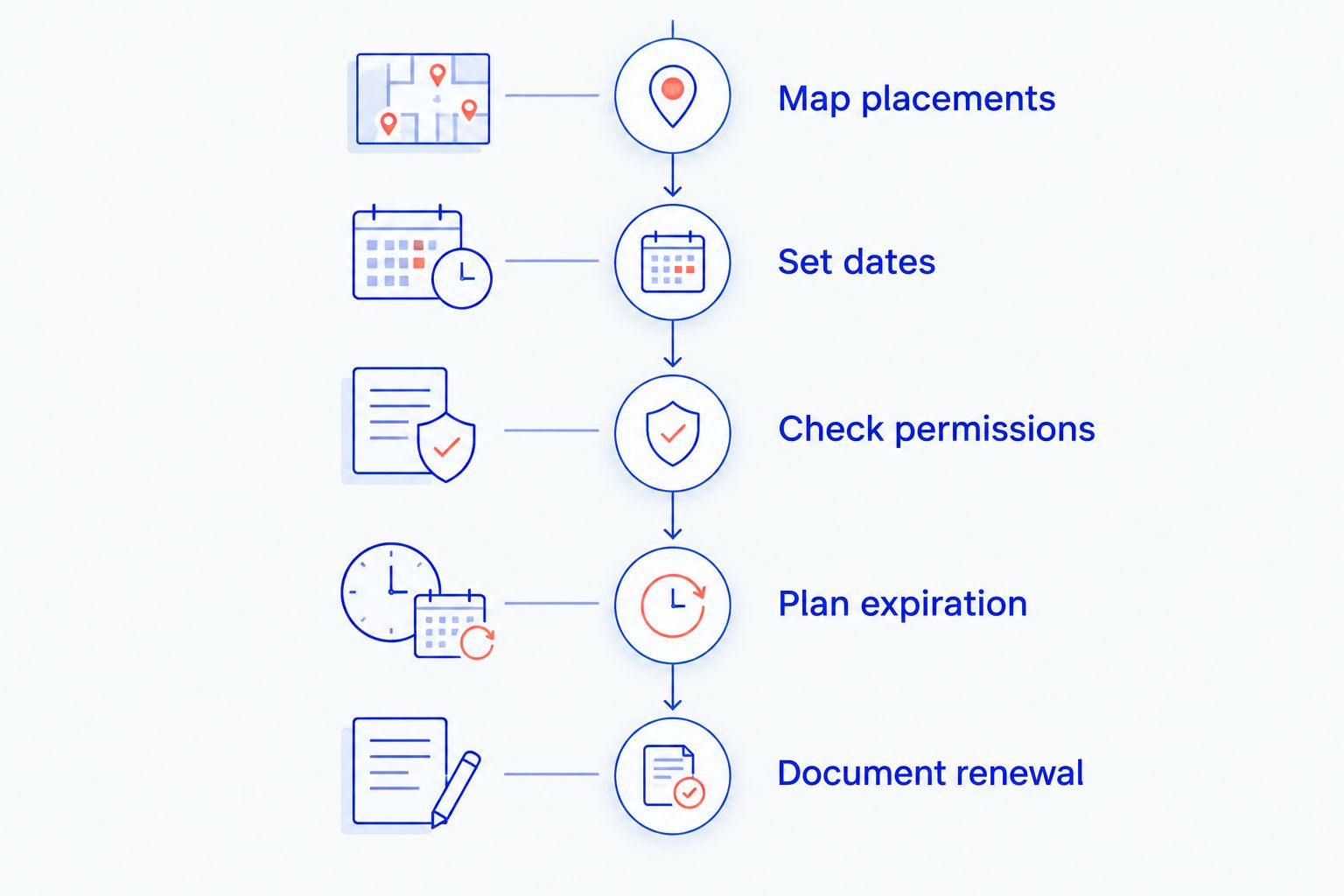
Keep a copy with the asset library and campaign handoff. The person scheduling a later advertisement needs access to the permission record, even if that person was not involved in the shoot.
Can old social posts stay online after the license expires?
Old social posts can remain only when the applicable agreement permits that continued display. Do not assume that leaving a post untouched is treated the same as removing it from active promotion.
Ask for language addressing archived organic posts, reposting, boosting, and new advertising use. These are separate publishing actions, and the agreement should tell your team which remain permitted after expiration.
If your 2026 campaign includes creator, retailer, or agency publishing, identify who controls each account. Your brand cannot complete a removal plan through accounts it does not manage without coordinating with those publishers.
Does extending a license also cover new channels?
Extending a license changes its duration only to the extent stated in the extension. New channels, markets, users, or campaign applications need their own explicit treatment.
A renewal discussion is a useful point to compare the original permission with the next publishing plan. State both what continues and what changes; do not rely on the word renewal to explain the scope.
FAQ
How many years should a usage rights license cover for beauty photography?
A beauty photography usage license should cover the planned publication and advertising period, not an assumed standard number of years. Define the start, end, permitted uses, and renewal process in writing.
Should my beauty brand ask for perpetual photography rights?
Ask for perpetual permission when the specified uses genuinely need no expiration date. Perpetual duration does not itself grant copyright ownership, unrestricted media, or permission for every third party.
When should a photography usage license start?
The license should start on the date or event defined in the agreement. Specify whether that is delivery, first publication, or a named calendar date rather than assuming those dates are equivalent.
Can I renew a beauty campaign photography license?
You can renew when the rights holder agrees or an applicable contractual option allows it. Follow the written process and confirm the extended duration and scope before continuing the affected use.
Does paying for a photoshoot mean my brand owns the photographs?
Paying for a photoshoot does not, by itself, establish copyright ownership. Ownership and permission to use the photographs depend on the applicable agreement and law.
Do model permissions need to match the photography license?
Model permissions and photography permissions must both support the intended publication. Check duration, media, territory, and restrictions across the relevant agreements before using campaign portraits.
What should I confirm with Courtney Dailey Photography before commissioning a campaign?
Confirm the intended campaign uses, publishing schedule, deliverables, and proposed usage terms with Courtney Dailey Photography. The practice specializes in beauty campaigns and cosmetic product photography, but project permissions need explicit agreement.
One last thing
Do not let your asset library turn an expired license into an accidental new campaign. Put permission information beside the files your team actually downloads: the approved users, media, territory, start date, end date, and renewal contact.
Before reusing a photograph, check both permission and product accuracy. A license can still be active while the packaging in the image is no longer current. The strongest handoff makes both checks possible without reconstructing the original shoot correspondence.